Introduction
The twelve entries in this glossary define terms that Trailblazing English designates as GAIN (Gender All-Inclusive or Neutral). They are general terms that can be used for any and all persons equally.
D
De, Der, Ders, Derself: GAIN singular third-person pronoun set that can be used for any deity. The “d” may be appear in upper- or lower-case, as desired. This pronoun set is based on Latin dea (f) and deus (m), meaning “deity.”
G
Ge, Ger, Gers, Gerself: Dubbed “The GEneral Pronoun Set,” these third-person singular pronouns can be applied when speaking about one person or used instead of the “Singular They” for those who don’t feel comfortable using “they” in sentences containing a general reference to “anyone” or “everyone.”
Examples:
Ge who laughs last laughs best.
Everyone take out ger textbook.
Related to the French noun gens and Spanish gente, meaning “people,” the etymology of this useful pronoun set can be traced back to Proto-Indo-European gene-, which also provides the root of many Conventional English words, including genetics, genus, and general and also the Trailblazing English words gen and genkind. (See link and next two entries below.)
https://www.etymonline.com/word/*gene-
Gen: (Plural gens) Alternative GAIN stand-alone noun for the already neutral words “person” or “people.” Gen can also be employed as a convenient one-syllable second element in a variety of compound words, such as chairgen or congressgen.
Gen already appears as an element in many English words, such as genealogy and genotype. It shares the same etymology with Spanish gente and French gens (each meaning “people”), and it can ultimately be traced back to the Proto-Indo-European root gene-. See link below:
Genkind: Based on gen above, the term “genkind” is a shorter alternative for “huminkind.” Both “genkind” and “huminkind” are considered GAIN words.
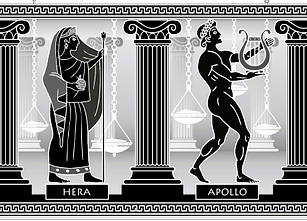
Godde: / gɒd /(plural “goddes” / gɒdz/ or “godden” / ‘gɒd – duhn /, written with an upper- or lower-case “g”) As with the terms “deity” and “divinity,” “Godde” is a GAIN term that can be used for a deity of any gender, multiple genders, or of no gender at all. Trailblazer English endorses this “double-d” spelling, which is already in circulation and gaining in prevalence, as an Internet search of the word will show.

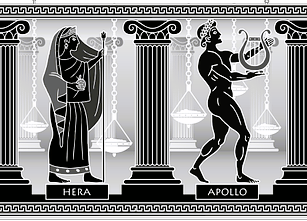
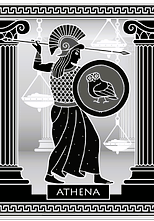
FYI: According to the Online Etymology Dictionary, the Germanic form of the word “god” was originally viewed as neuter, but with the coming of Christianity, its gender shifted to masculine.1 (See link below, third paragraph.)
https://www.etymonline.com/word/god
While many people today, including Progressive Christians, see deity and the word “god” as gender neutral or gender-all-inclusive, adopting the double-d spelling “godde” signals more clearly in print the belief in the GAIN concept of deity.

H
Humin: Trailblazing English puts the “I” in the word for all people! In Conventional English, the “i” following the “m” is already found in “humility” and also in the term “hominid,” referring to the large family group to which the humin species belong.
Related Trailblazing English words in which the “i” follows the “m” include nouns huminkind, huminism, huminist, and huminity; the adjective humine; and the adverb huminely.
S

Siblinghood: GAIN term that replaces the androcentric “brotherhood.”

Spouse: This much-used word for any married person regardless of sex or gender is also a convenient GAIN term. Trailblazer English offers the three alternatives below for cases when the situation calls for being more specific about a spouse’s sex or gender identity:
Spouseman: A male spouse. Used when it is necessary to indicate that a spouse is a man.
Spouseren: A ren who is married. Used when it is necessary to indicate that a spouse is a ren. (See the entry for “ren” in the Nonbinary Visibility Glossary.)
Spousewenn: A femele spouse. Used when it is necessary to indicate that a spouse is a wenn.
T
They, Their, Theirs, Them, Themself, Themselves: Trailblazing English endorses the “Singular They” as a GAIN third-person pronoun set for use when a speaker is referring to anyone generally or when a particular gender-variant person is talking about themself.
For more on the growing acceptance of “Singular They” use for specific individuals and the reclaiming — Yes, the reclaiming! — of its use in the generic sense, see the links to two English language authorities below:
The Merriam-Webster Dictionary — The Singular ‘They’ —https://www.merriam-webster.com/wordplay/singular-nonbinary-they
MLA Style Center – https://style.mla.org/using-singular-they/?gclid=CjwKCAiA-8SdBhBGEiwAWdgtcJvmqK4w5kDEv3DpMWTSoFBnnYCu-9qIoCq_BUqNlaRuot3kWkRBOhoCRaQQAvD_BwE
 Stage Pagan