Introduction
The shortest of the TE glossaries with five entries, it, nevertheless, makes the boldest statement about the relationship between language and respect. TE replaces the Conventional English terms female, wife, and woman with the Trailblazing English words femele, spousewenn, and wenn. These changes introduce — or reintroduce — words with etymologies that honor the dignity of nearly half the world’s population. I hope you will agree!
Why “Wife” and “Woman” Must Go!
The meaning of a word may change over time;
Justy DeForest,
its etymology does not.
Poet / playwright & trailblazing english user

Trailblazing English rejects the words “wife” and “woman.” While their etymology is disputed, some linguists suggest they trace back to the reconstructed Proto-Indo-European (PIE) root ghwibh–, meaning “shame” or “pudenda” (i.e., cunt).
The Producer of Children — and Ideas!
Trailblazing English takes a positive, healthy stance on feminine sexuality, stressing the enlightened view that there is nothing “shameful” or “dishonorable” about it. Furthermore, while the ability to bear young is one of the greatest powers in Nature, not all members of the sex can or want to have children. Language can do better than naming an entire sex for an organ found between the legs!

Looking at our cultural heritage through the ages, the femele mind has produced greatness in many areas, including philosophy, mathematics, art, and literature, as well as in promoting a civil society. Trailblazing English reaches across to Mandarin Chinese wén (writing, civil, cultured) and back to the Proto-Indo-European root, gen- (produces) to coin the word “wenn” as its term for a femele humin being. Therefore, the meaning of “wenn” is ultimately “cultural producer,” an idea which clearly acknowledges the fact that a wenn can produce many things beneficial to society besides children! (See to entry for wenn below.)
Five Wennly Words for Respectful English
F
Femele: / fə –ˈmɛl / TE returns the middle “e” to this English word, which came from the Latin femella and had no etymological connection to “male.”
The spelling and pronunciation were corrupted, being changed to the androcentric “male” in the fourteenth century by John Barbour, Archdeacon of Aberdeen, in his narrative poem, “The Brus.” His reason: He wanted the words for the femele and male sex to rhyme. (See link below):
https://drive.google.com/file/d/1gQNEn7Z0Sflfee5kUrJeFRS5pOcLw633/view?usp=sharing
By restoring the middle “e” to “femele,” Trailblazing English users signal their respect not only for the integrity and unique character of the word that names the femele sex, but, by extension, for the femele sex, itself!

Femisma: (fə – meez’ – mah / fə – ‘mi:z – mɑː/ ) A term meaning the indominable power of the femele humin being. Femisma is a quality that includes her uniquely feminine brand of physical energy, strength, motion, and stamina; her mental agility, judgment, and fortitude; and her emotional capacity for tolerance, diplomacy, empathy, and compassion. In other words, the quintessential iron fist in a velvet glove! (Also see “wennisma” below.)
NOTE: Femisma is NOT the feminine version of machismo; rather, femisma refers to that feminine power unique unto itself!
S
Spousewenn: The term for “spouse” used in Trailblazing English when it is necessary to indicate that a married person is femele. Otherwise, TE speakers simple use “spouse” for any married person, regardless of sex or gender identity. See link to the etymology of “spouse” below:
https://en.wiktionary.org/wiki/spouse
W
Wenn: ( sg.: / wɛn / pl.: wenns / wɛnz / or wennen / ‘wɛn – nɛn / ) Trailblazing English word for an adult femele humin being. It is also employed as a convenient one-syllable element in compound words relating to a femele person, such as congresswenn, midwenn, and wennhood.
There are two sources for “wenn.” Each is discussed below.
“Wenn” from Madarin Chinese “Wén“
One source for “wenn” is Mandarin Chinese wén, which literally means “writing” and “literature” but is also used in the sense of possessing the qualities of a literate person — i.e., being “cultured” and “civil.” Click on the hyperlink for wén to read more.
NOTE: In Chinese philosophy, in addition to the Yin and Yang dichotomy, there is another dichotomy between Wén and Wŭ. The concept of Wén is represented by the archetype of The Scholar, dedicated to the Peaceful Arts, including the art of governing. By contrast, Wŭ is represented by The Warrior, dedicated to the Martial Arts.1
- Gwong Zau Kung Fu, Wen-Wu: The Civil and the Martial in the State and in the Individual, December 07, 2021. https://gwongzaukungfu.com/en/wen-wu-the-civil-and-the-martial/
“Wenn” from Proto-Indo-European “Gen-“
The other source for “wenn” is the Proto-Indo-European root “gen-” which means “to produce or to bear.” And as it can also mean “to beget,” it is an inclusive word that applies equally to cisgender and transgender wennen. Click on the hyperlink for gen- and scroll down past the first two paragraphs to see more.
As “wenn” begins with “w,” Trailblazing English speakers who cringe at the word “woman” can still, in good conscience, conveniently use acronyms common in Conventional English, such as YWCA or WIC, easily substituting TE “wenns or wennen” for the unacceptable CE word.
“Wenn” — Not From Old English “Cwen”
Once upon a time in Old English, cwen was the term used for any adult femele person.

The etymology of cwen, however, goes back to Proto-Indo-European gwen-, a root shared among many languages, both living and extinct, (See the Kurdish Language Project Chart.) However, it means both “femele humin being” and “femele spouse” as well as “queen.” Trailblazing English wenn, by contrast, comes from the PIE root gen-, which carries the meaning “to produce, to bear, or to beget” but is independent of the meaning “spouse. ” Wenn, therefore, widens the scope of what a femele humin being can produce and how she can reproduce — and, importantly, with no association to her marital status.
Fellow etymology nerds can click on the following hyperlinks to compare more differences between the Proto-Indo-European roots gwena- (queen) and gens- (produces). And check out these words related to gens- in Sanskrit, jan and janayatiḥ.
Wennisma: (wen- neez’-mah) An alternative to femisma, also alluding to “the indominable power of wenns.” As the etymology of the first syllable of femisma is the same as femele and has its etymological roots in the meaning “to suckle,” wennisma may be preferred by those wenns who want a term not intrinsically tied to the ability to nurse. See the link below:
Are You Ready to Be a Linguistic Trailblazer?
So now that you know the etymology of “WOMAN” and “WENN,”
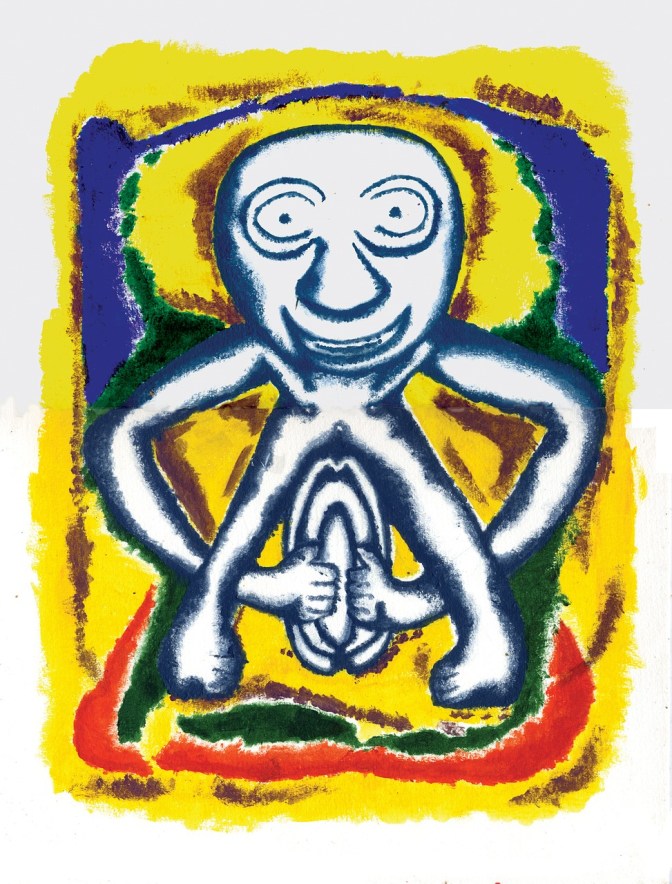
WOMAN
( Cunt-Person, shame, dishonor )

WENN
( Producer, cultured, civil )
Which word would you rather call
— your mother?
— your sister?
— your spouse?
— your daughter?
— YOURSELF?!
A Pep Talk
Perhaps, you agree with the goals of Trailblazing English and would LOVE to start using these respectful words but find yourself a little self-conscious. You may ask, “What will people think of me?” That’s perfectly normal! Every Trailblazer wonders that when first starting out on a quest to change society.
Below is a success story from the 1970s to boost your courage and show you that linguistic change has been accomplished in the past and can be accomplished now, too!
Success Story from the 1970s: Ms.
Back in the 1970s, many foreward-thinking and just-minded wennen and their allies fought for the adoption of the honorific “Ms.”
These wenns asked, “Why should there be two titles for us — ‘Miss’ and ‘Mrs.’ — so that men can know whether we are singular or married when we can’t glean the same information about them from their one title, ‘Mr.’?”

Introducing the honorific “Ms.” was a perfectly logical solution to this inequity, but, Oh! how the opponents of “Ms.” — of both polar sexes — ridiculed those who wanted to level that playing field!

However, the champions of “Ms.” did not back down. They continued to use “Ms.” Fast forward 50 years, and today it is simply accepted as a standard honorific!
The campaign for “Ms.” back in the 1970s stands as a shining example to all People of Good Will no matter what their gex (i.e., gender/sex combination) of what can be accomplished by having a vision, dedication, and persistence.
So, when you’re ready —
Join the Movement
for
Linguistic Justice.
Honor All In Language!

Say “Wenn”!

